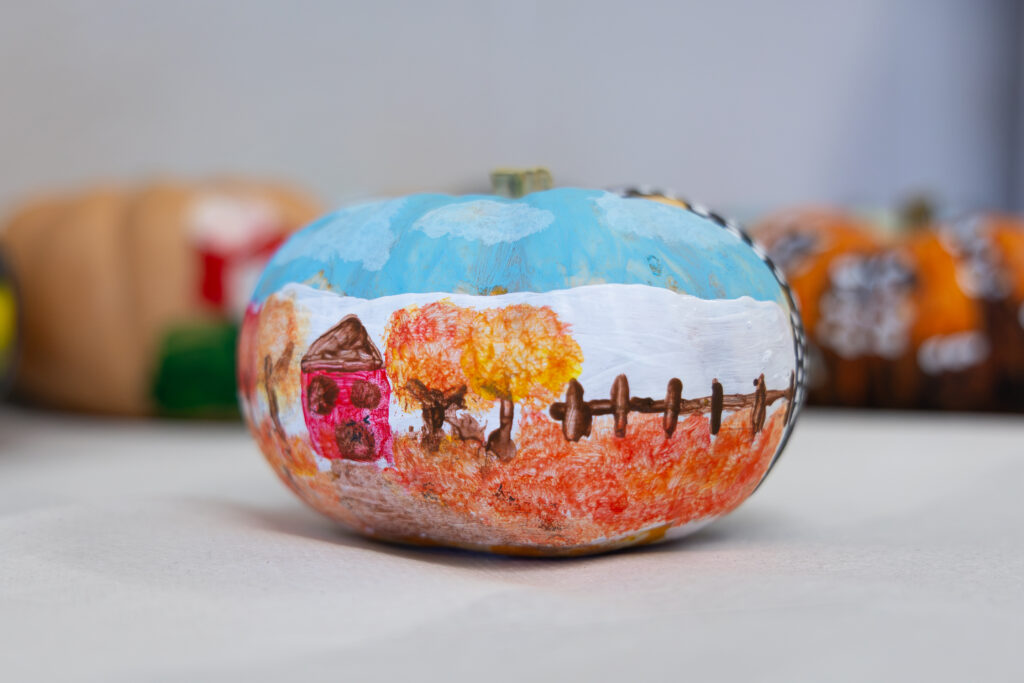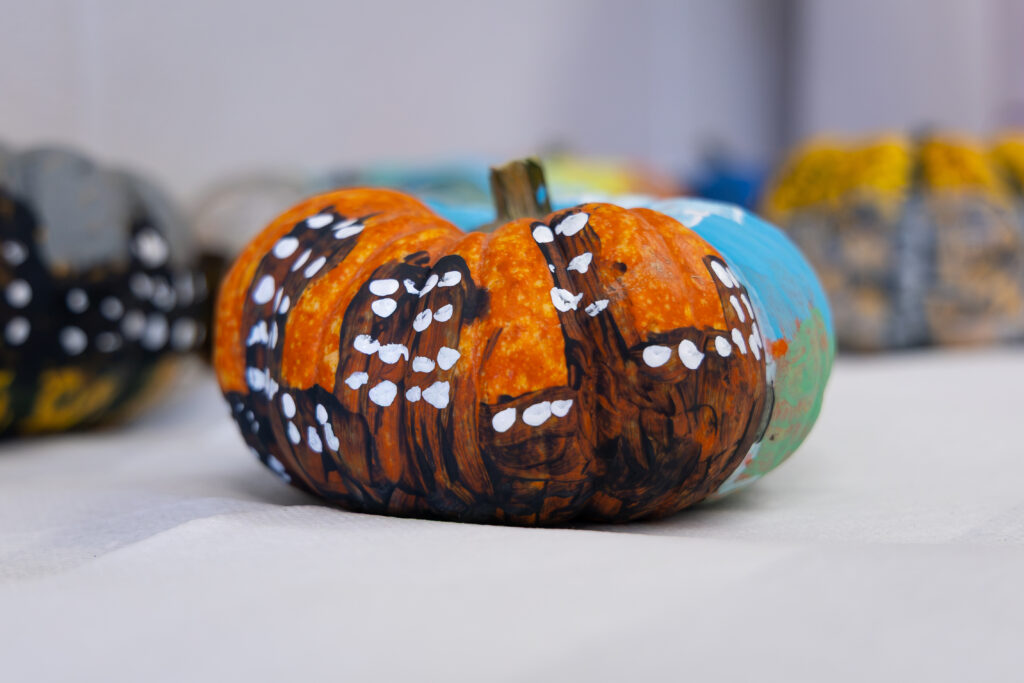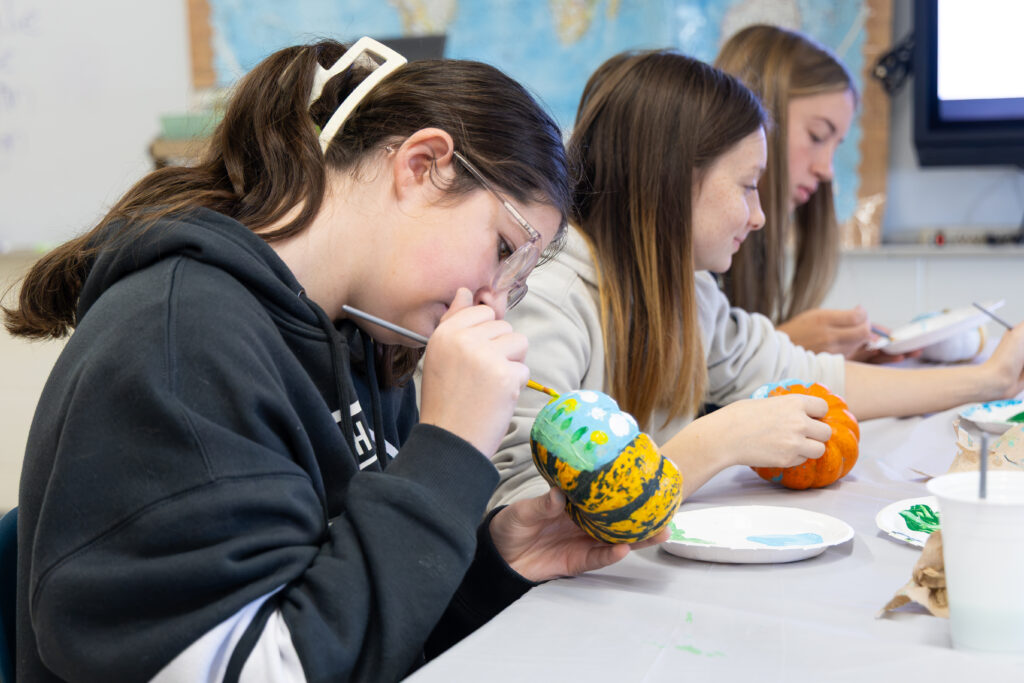
Students in Holly Delwiche’s history classes put their historical knowledge and artistic skills to the test by painting pumpkins with themes tailored to their specific courses.
Eighth grade history students painted U.S. national parks, ninth graders created scenes representing ancient civilizations, and 10th graders designed dual-sided pumpkins showing the shift to the Industrial Revolution. Each student chose a specific geographic location and styled their pumpkin to capture its unique history and natural environment.
“Students were asking for something related to Halloween, and I wanted to do something that was creative and also relevant to our social studies curriculum,” Delwiche said.
For the eighth graders, exploring the national parks visually brought their geography lessons to life. Eighth grader Gianna Spinnato chose to paint Yellowstone National Park because of its scenic features.
“I chose this location because I thought that the lake is really, really pretty and I figured that would look really good on a pumpkin,” Spinnato said. “When you’re only told about a location, you have to depend on your mind to make it up. Visually seeing a place and just hearing about it is way different.”
Classmate Brady Tambasco also found that mapping out a park’s distinct landscape changed his perspective on the textbook material while working on his painting of Olympic National Park.
“It’s helped me learn by showing me what different parks look like, how beautiful mountains can be, and the different types of mountains we have,” Tambasco said, noting that he hopes to visit the park in person one day.
After completing their artwork, each class voted on their favorite designs, with winners receiving prizes.
“I hope the students can see how things in their daily lives relate to our curriculum,” Delwiche said. “Many of them talk about carving pumpkins and doing holiday activities, so this was a great way to combine those customs with hands-on learning.”